
Of all the requests we get during a villa renovation scoping call, underfloor heating is the one that surprises new clients most when we recommend it. It sounds counterintuitive in a city known for 45°C summers. But the request almost always comes from people who've already lived through a Dubai winter — and discovered that large-format porcelain or marble floors, in a home cooled by air conditioning most of the year, can feel genuinely cold on a December or January morning.
Why villa owners install it anyway
Dubai winters are short but real — early morning temperatures from December through February commonly sit around 14-18°C, and villas with high ceilings, large stone or porcelain floors and central AC hold onto that morning chill more than smaller, carpeted homes. Underfloor heating solves exactly this discomfort, and it works particularly well with the flooring materials Dubai villas already favour: porcelain and natural stone both conduct heat efficiently, transferring warmth from the system into the room far better than an insulating material like carpet or thick engineered wood would.
Electric vs hydronic systems
There are two fundamentally different ways to heat a floor, and the right choice depends heavily on whether you're renovating or building new.
Electric mat systems use a thin heating element — typically around 3mm — laid directly under the tile bed. They're the far more practical option for a renovation, since they can be installed room by room (a bathroom, a primary bedroom) without disturbing the rest of the villa's plumbing or requiring a boiler. Hydronic (water-based) systems circulate warm water through a network of pipes beneath the floor, connected to a boiler or heat pump. They're more energy-efficient for heating an entire villa, but the pipework is disruptive and expensive to retrofit into an existing slab — hydronic systems make far more sense in new-build construction than in a renovation of an occupied home.
| Factor | Electric (mat) | Hydronic (water-based) |
|---|---|---|
| Retrofit difficulty | Low — thin profile, room by room | High — requires pipework & boiler |
| Best suited to | Renovations, single rooms | New-build, whole-villa systems |
| Running cost | Low given short Dubai heating season | Lower per sqft at full-villa scale |
The running cost reality
Unlike Europe, where underfloor heating might run for six months of the year, a Dubai system is realistically only switched on for two to three months — the December to February morning chill. That short usage window means the electricity cost of actually running the system is modest; the real cost consideration is the upfront installation, not ongoing bills.
💡 Install it only under stone or porcelain during your renovation
If you're renovating anyway, this is the moment to add underfloor heating — retrofitting it later means lifting the finished floor entirely. Prioritise bathrooms and the primary bedroom, where the comfort return is highest and the floor is already being replaced.
⚠ Don't run mats under fitted cabinetry
Electric heating mats should never be installed under kitchen toe-kicks, fitted wardrobes, or bathroom vanity units. It wastes energy heating a surface nobody stands on, and trapped heat under cabinetry can shorten the system's lifespan.
Where it makes sense — and where to skip it
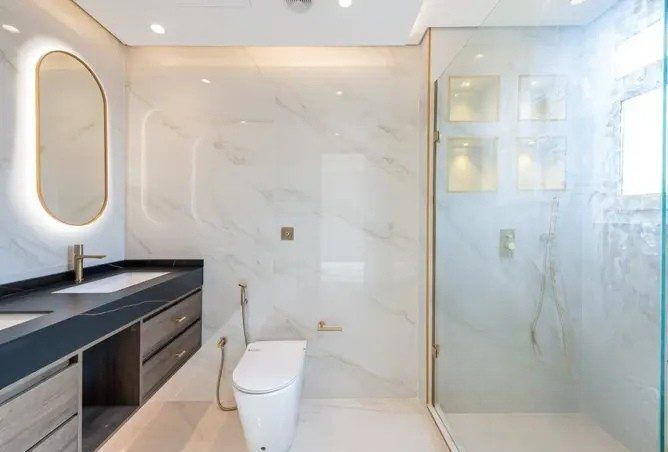
Based on what we've specified across Meadows and Arabian Ranches renovations, the clearest comfort return is in primary ensuite bathrooms and the primary bedroom floor — rooms with porcelain or natural stone flooring that see daily barefoot use first thing in the morning. It's rarely worth specifying under engineered wood flooring, which insulates more than it conducts, or in rarely-used guest rooms where the comfort benefit is never actually felt.
Considering Underfloor Heating for Your Renovation?
Our MEP upgrades team can scope electric underfloor heating alongside your flooring renovation. Get a real number for your villa.
Try the Cost CalculatorFrequently asked questions
Is underfloor heating worth it in Dubai?
For bathrooms and primary bedrooms with stone or porcelain floors, many Dubai villa owners find it genuinely worth it — winter mornings (December to February) can dip to 14-18°C and stone floors feel noticeably cold with air conditioning running. Running costs are low since it's only used for a few months a year.
Electric or hydronic underfloor heating — which is better for a Dubai renovation?
Electric mat systems are almost always the better fit for a renovation, since they have a thin profile of around 3mm and can be installed room by room without major plumbing work. Hydronic (water-based) systems are more efficient for whole-villa heating but are far easier to install during new construction than as a retrofit.
Can you put underfloor heating under any flooring material?
Porcelain and natural stone conduct heat efficiently and are ideal for underfloor heating. Engineered wood can work with specific low-temperature systems but insulates more than stone, reducing efficiency, while carpet is not recommended as it insulates against the heat almost entirely.