Bathrooms are the most demanding wet area in any villa — constant moisture, Dubai's mineral-heavy tap water, bleach and acidic cleaning products, and in many primary suites, underfloor heating running beneath the surface. Whatever material goes down needs to handle all of that for a decade or more without looking tired. The choice usually comes down to natural stone or porcelain, and the honest answer is that the right one depends on exactly which surface in the bathroom you're specifying.
Natural stone in wet areas
Marble, travertine and limestone bring genuine depth and warmth to a bathroom that manufactured surfaces still struggle to fully match — this is why so many primary ensuites in Arabian Ranches and Emirates Hills villas lead with a natural stone vanity wall or freestanding tub surround. The trade-off is maintenance: all three are porous and need sealing on installation, then resealing roughly every 12-18 months, more frequently on shower floors under constant water exposure. Natural stone also etches from bleach-based cleaners and acidic descalers used to tackle Dubai's hard water, so cleaning routine matters as much as the initial sealing.
Porcelain in wet areas
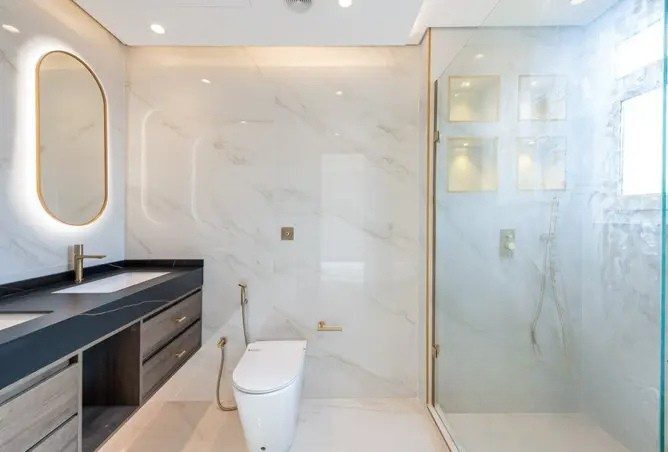
Modern large-format porcelain has closed much of the visual gap with natural stone — high-resolution digital printing can reproduce marble veining and travertine texture convincingly, especially in slabs over 1.2m. What porcelain adds on top of the look is practical performance: water absorption below 0.5% means it essentially never needs sealing, doesn't stain, and won't react to bathroom chemicals. Large-format slabs also mean fewer grout lines behind a shower or around a tub — fewer lines means less mould-prone grout to maintain, which matters in a climate where humidity supports mould growth year-round. Slip-rated finishes (R10/R11) are also readily available in porcelain for shower and wet room floors.
| Factor | Natural Stone | Porcelain |
|---|---|---|
| Porosity | Porous — needs sealing | Near-zero, no sealing |
| Sealing frequency | Every 12-18 months | Never |
| Hard water / etching risk | High with acidic cleaners | None |
| Slip resistance options | Honed finish recommended | Wide range incl. R10/R11 |
| Cost per sq ft (installed) | AED 180 – 350 | AED 70 – 120 |
| Best use | Feature walls, vanity tops | Shower floors, walls, whole bathroom |
⚠ Bleach-based cleaners etch natural stone
Common bathroom cleaners and hard water descalers are often acidic or bleach-based, both of which etch marble, travertine and limestone. Use a pH-neutral stone cleaner on any natural stone surface, and keep harsher products for porcelain areas only.
💡 Large-format porcelain means fewer grout lines
Specifying 1.2m+ porcelain slabs behind a shower or bath can eliminate almost all vertical grout joints — a meaningful hygiene and maintenance upgrade in a high-moisture room, and one clients rarely think to ask for upfront.
A practical zone-by-zone recommendation
In the bathrooms we've renovated across Arabian Ranches and The Meadows, the combination that works best in practice is porcelain on the shower floor, shower walls and general floor area — where low maintenance matters most — paired with a natural stone feature, such as a vanity countertop, freestanding tub surround, or a single accent wall. You get the tactile, high-end material where you'll actually appreciate it, without committing your entire wet zone to something that needs resealing every year. For the fittings that go with either flooring choice, see our guide to sanitary ware brands compared, and for worktop-specific stone advice, our kitchen worktop materials guide covers the same quartz-granite-marble trade-offs that apply to bathroom vanity tops.
What neglecting maintenance actually costs
The gap between natural stone and porcelain becomes most obvious a few years in, not on installation day. A marble shower floor that's never been resealed will show dull, permanently etched patches where hard water and shampoo residue have sat, and restoring that finish means bringing in a stone specialist to hone and reseal the surface — a cost most homeowners don't budget for upfront. Porcelain simply doesn't accumulate that liability; a decade in, a well-installed porcelain wet room looks close to how it did on day one, provided the grout itself has been kept clean. That difference in long-term cost of ownership is worth weighing alongside the upfront price per sq ft when you're deciding how much of the bathroom to commit to stone.
Planning a Bathroom Renovation?
Our bathroom renovation team can advise on the right stone and porcelain combination for your wet areas — and price it in our cost calculator before you commit.
Try the Cost CalculatorFrequently asked questions
Is natural stone or porcelain better for a Dubai bathroom?
Porcelain is the more practical choice for the majority of a Dubai bathroom because it is virtually non-porous, needs no sealing, and resists hard water spotting and etching from cleaning products. Natural stone still suits a feature vanity wall or freestanding tub surround where its texture and veining are the main draw.
Does natural stone need sealing in a bathroom?
Yes. Natural stone such as marble, travertine or limestone is porous and should be sealed on installation and resealed roughly every 12-18 months in a bathroom, more often on shower floors that see constant water exposure.
What slip rating should Dubai bathroom floor tiles have?
Wet room and shower floors should carry at minimum an R10 slip rating, with R11 preferred for walk-in showers and areas that see standing water. A honed or textured finish will always be safer underfoot than a polished one.