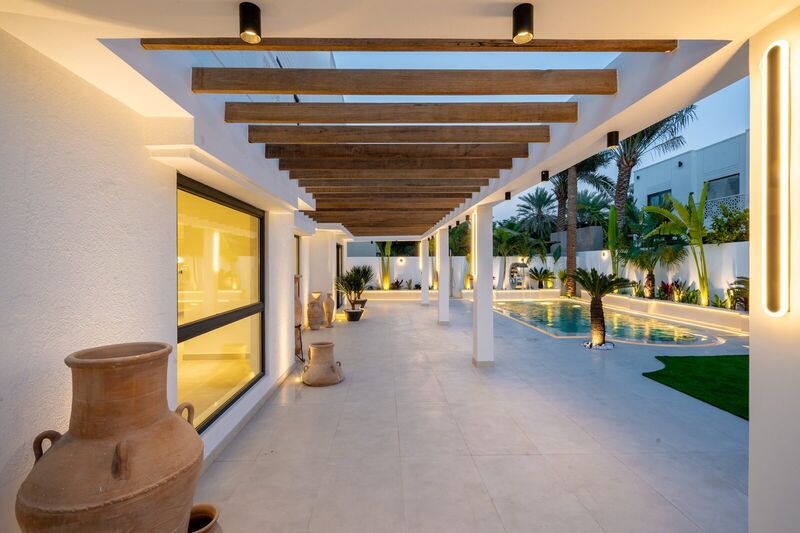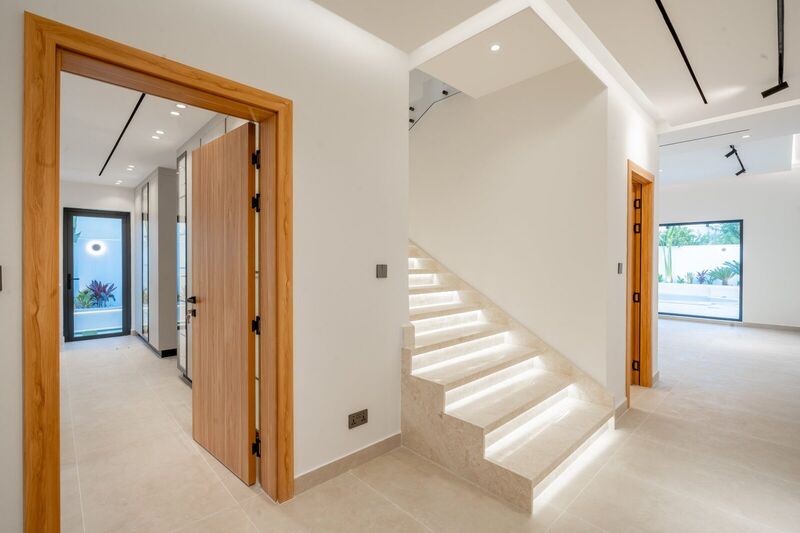
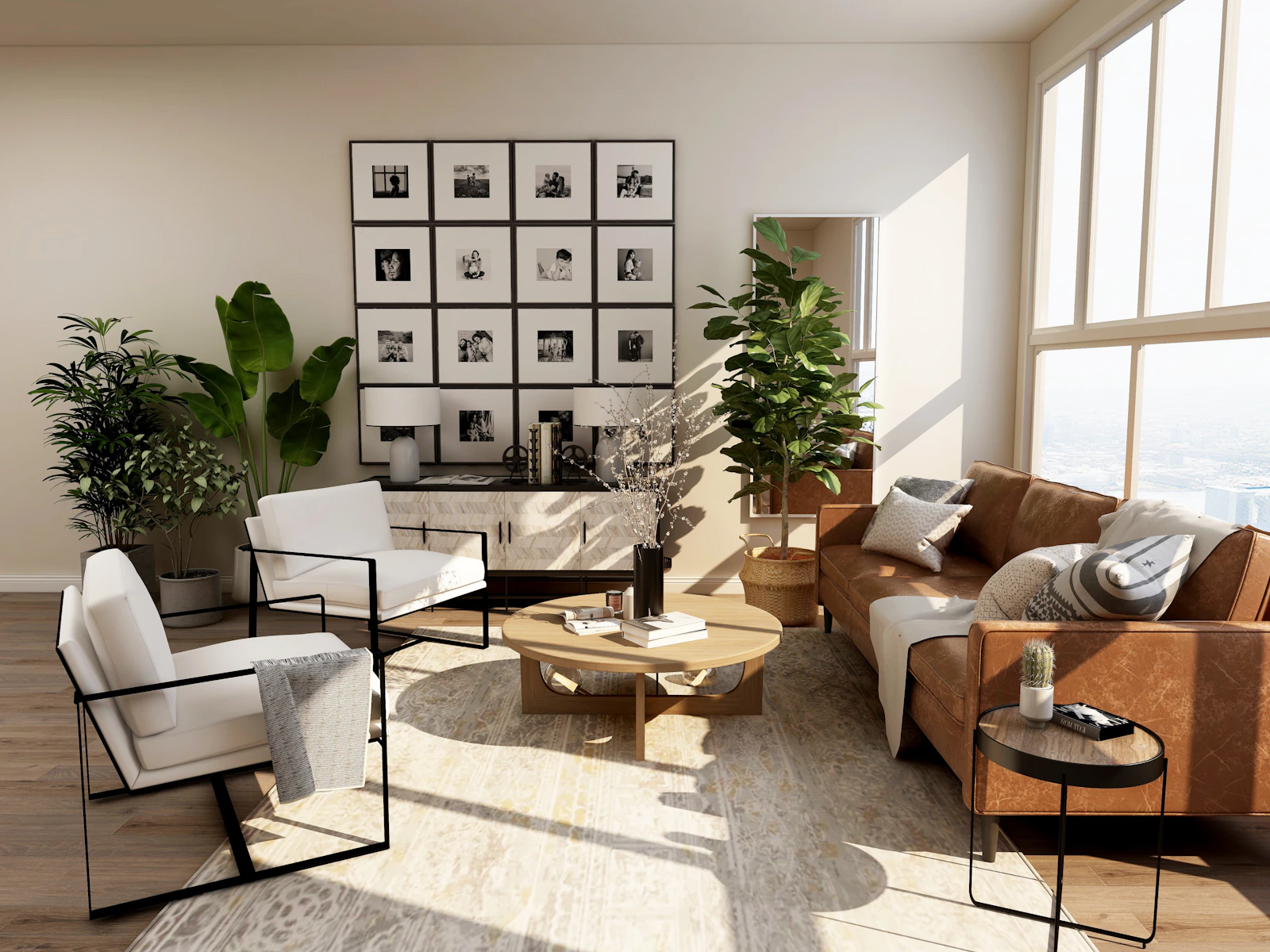
Dubai spends roughly eight months of the year pushing residents indoors, behind glazing, under air conditioning. It's an understandable trade-off for comfort — but it also means most villa interiors here are more disconnected from nature than almost anywhere else in the world. Biophilic design is the corrective: a design philosophy built on decades of research showing that daylight, greenery, natural materials and views of the outdoors measurably improve mood and focus. Done well, it doesn't fight Dubai's climate — it works with it.
This is not about scattering a few potted plants around a living room. Biophilic design, as defined by biologist Stephen Kellert and later formalised into practical "patterns" used by architects worldwide, covers everything from direct contact with plants and water to indirect cues like natural materials, organic shapes and the quality of light itself. For a Dubai villa renovation, the challenge is translating these patterns into a home that stays genuinely liveable at 45°C in August.
Direct and indirect nature — Kellert's patterns, applied
Kellert's framework splits biophilic design into direct experiences of nature (plants, water, airflow, daylight) and indirect experiences (natural materials, natural colour palettes, organic forms, and views that reference nature even where the real thing isn't present). In a Dubai home, both matter — and the indirect patterns often carry more weight, because true "direct" exposure like open windows and unshaded courtyards has real limits for half the year.
Practically, that means layering: a courtyard planted with drought-tolerant species (direct), paired with raw timber joinery and a stone-toned palette throughout the interior (indirect), paired again with large format sliding glazing that frames the garden from the living space even when the doors stay closed on a 44°C afternoon.
Daylight without the heat load
Maximising daylight is one of the highest-impact biophilic moves — and one of the trickiest to get right here, because more glass usually means more solar heat gain and a bigger cooling bill. The fix isn't smaller windows; it's smarter ones. Low-E (low-emissivity) double glazing blocks a large share of infrared heat transfer while still passing visible light through, so a room can feel bright without the glass turning into a radiator. Deep roof overhangs and pergolas do the rest of the work outside, shading the glazing at the high midday sun angle while still admitting the lower-angle morning and evening light that biophilic design prizes most.
Inside, layer your window treatments rather than choosing one. A sheer linen layer softens and diffuses daylight through the middle of the day, keeping the connection to outside alive without glare; a separate blackout layer behind it handles the west-facing bedroom that turns into a furnace by 4pm. This two-layer approach is standard in high-end villa renovation projects, because it lets each room be tuned independently instead of forcing every window to compromise — often the single change that most transforms how a room feels.
Material honesty
Biophilic interiors lean on materials that show their origin rather than disguise it — raw oak with visible grain instead of a printed laminate, honed limestone instead of high-gloss porcelain, woven rattan instead of moulded plastic, and unlacquered brass fittings left to patinate rather than kept mirror-polished. This "material honesty" is one of Kellert's indirect patterns, and it tends to age far better in a Dubai villa than a synthetic, uniform finish — natural materials develop character over years of use rather than simply looking tired.
It's also where biophilic design overlaps with sustainable, eco-friendly renovation choices — locally sourced stone, FSC-certified timber and low-VOC finishes tick both boxes at once. And for clients drawn to a quieter, more restrained material story, this same honesty is a core plank of Japandi and minimalist interiors — pared-back palettes built almost entirely from a handful of well-chosen natural materials rather than pattern or ornament.
Water, thoughtfully
Water is one of the most powerful biophilic elements — the sound and movement of it measurably lowers stress — but it also needs realistic planning in a desert climate. An open reflecting pool or fountain loses a significant volume to evaporation across a Dubai summer, and untreated standing water invites algae and mosquitoes fast. The workable version is usually a recirculating water feature with a covered or shaded reservoir, positioned to be seen and heard from the main living space through glazing, without needing daily upkeep. A shallow rill or a single sculptural fountain integrated into the pool deck or courtyard delivers the sensory benefit at a fraction of the maintenance burden of a large ornamental pond.
Planting that actually survives Dubai
This is where most biophilic ambitions in Dubai homes quietly fail — not from bad design intent, but from choosing plants suited to a humid climate and placing them in a bone-dry, air-conditioned room. Indoor relative humidity in a Dubai villa often sits well below what a plant native to a rainforest understorey needs, and AC airflow dries leaves out further.
Species that genuinely tolerate these conditions and still deliver real visual impact include Sansevieria (snake plant), ZZ plant, Areca palm, Ficus, and Monstera — all reliable in bright, indirect light. Save moisture-loving ferns and orchids for a bathroom with natural steam or a dedicated humidifier, or keep them for shaded, irrigated courtyard planting instead.
💡 Keep planting out of the direct AC airflow
Even the toughest indoor species will scorch and drop leaves faster if they sit directly under a supply vent or in the cold, fast-moving air of a split unit. Position larger planting a few metres back from vents, or add a diffuser panel above smaller specimens — it makes a bigger difference to plant survival than the species choice itself.

Courtyards, atriums and indoor-outdoor sightlines
The traditional Gulf courtyard house solved the biophilic problem centuries before the term existed — a shaded, planted, often water-cooled internal space that every surrounding room could open onto, protected from sun and dust. Many contemporary Dubai villas can borrow the same logic without a full internal courtyard: a covered atrium off the main living space, or simply a considered sightline from the kitchen and living room through to a landscaped garden or pool, achieves much of the same effect.
Sightline planning matters as much as the planting itself. A kitchen island facing the garden rather than a wall, or a staircase landing with a window onto a green courtyard instead of a blank facade, keeps the connection to nature present throughout the day. This is the essence of what we cover in more depth in our guide to indoor-outdoor living for Dubai's climate — glazing, layout and landscaping working together rather than as separate decisions.
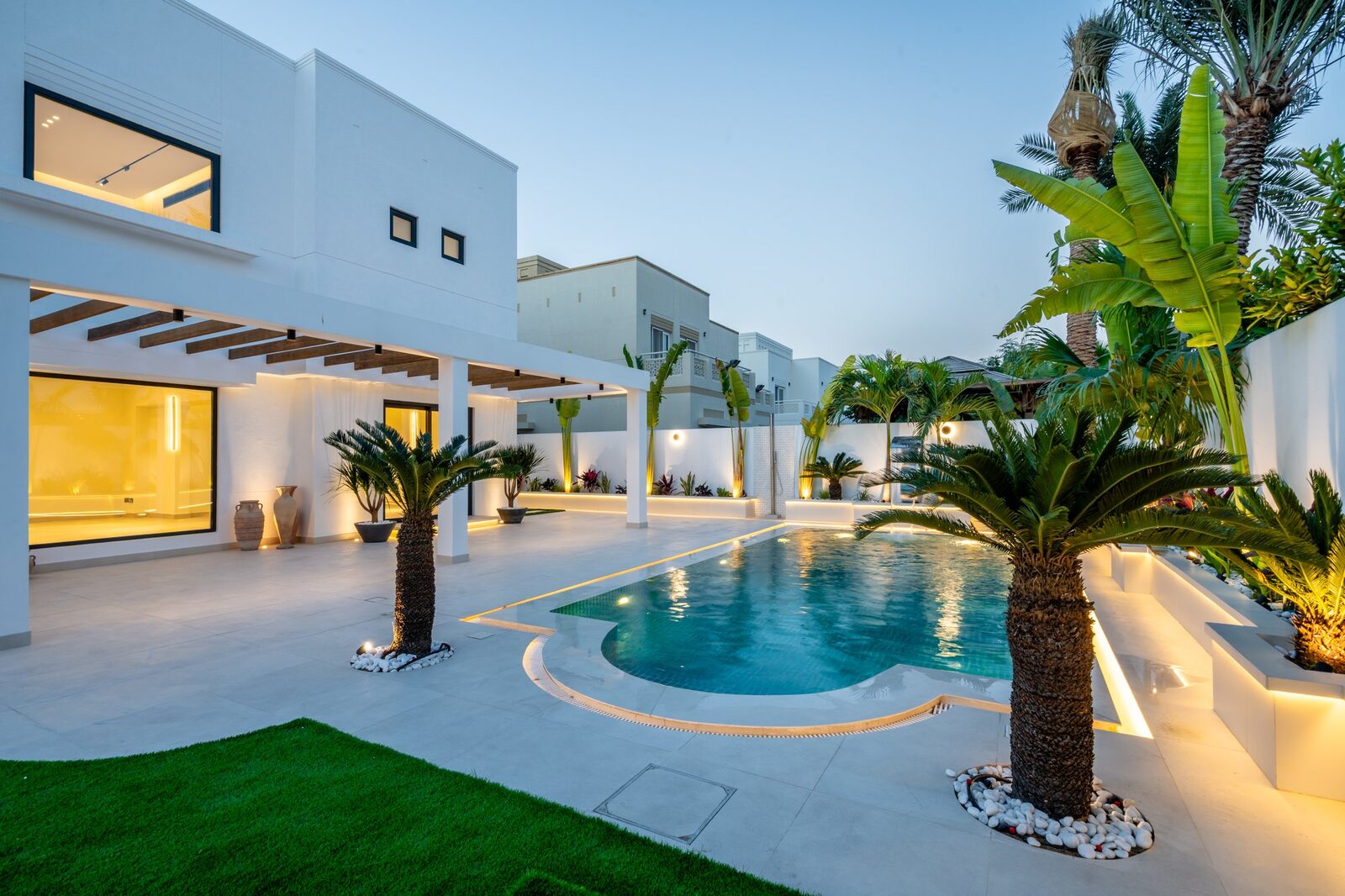
On our own Meadows villa renovation, opening up the rear elevation and reworking the garden as a genuine extension of the living space was one of the highest-value moves in the whole project — the kind of result a good landscaping plan, coordinated with the interior renovation rather than treated as an afterthought, can deliver.
Bringing it together, room by room
Biophilic design works best as a thread through a whole renovation rather than a single feature room: low-E glazing and layered window treatments where the layout allows, a restrained palette of honest natural materials across joinery and flooring, a shaded and recirculating water feature rather than an open pond, planting chosen for Dubai's indoor conditions and positioned away from AC vents, and — wherever the site allows — a garden or courtyard sightline from the kitchen and main living space. None of this individually requires a large budget; planned from the start of a renovation, it changes how a home actually feels to live in.
Curious What It Would Cost for Your Villa?
Our calculator factors in your exact size, finish choices, and room count — no generic averages.
Try the Cost CalculatorFrequently asked questions
What is biophilic design and does it work in Dubai's climate?
Biophilic design is the practice of connecting interior spaces to nature through natural light, planting, organic materials, water, and views of the outdoors. In Dubai it works exceptionally well when adapted to the climate — using controlled daylight, shaded courtyards, drought-tolerant planting and indoor-outdoor sightlines rather than simply importing a temperate-climate look wholesale.
What plants survive best indoors in a Dubai villa?
Sansevieria (snake plant), ZZ plant, Areca palm, Ficus and Monstera all tolerate Dubai's low indoor humidity and air-conditioned interiors well when placed in bright, indirect light. High-humidity species like most ferns generally struggle indoors here unless you run a dedicated humidifier near them.
Does biophilic design increase renovation cost?
Biophilic design can be introduced at almost any budget — planting, textiles and layout changes are relatively low-cost, while structural moves like enlarging glazing or adding a courtyard carry a real premium. Most villa renovations blend a few high-impact structural moves with lower-cost material and planting choices to control the overall spend.