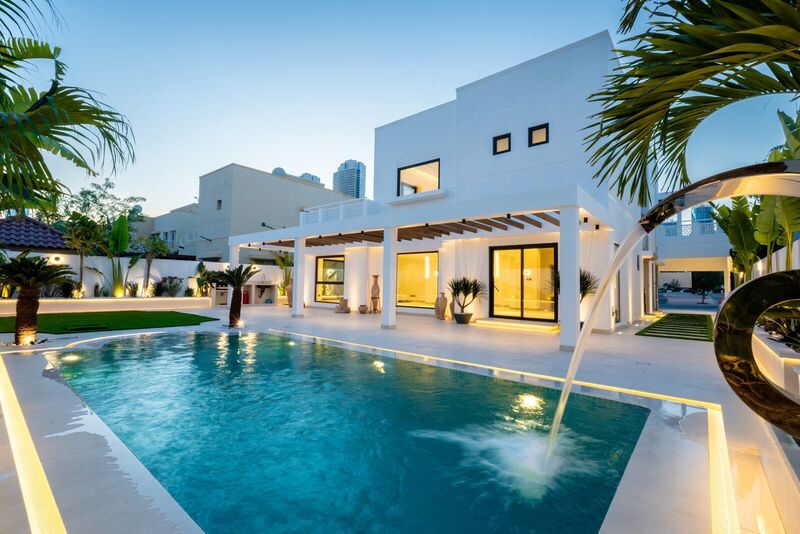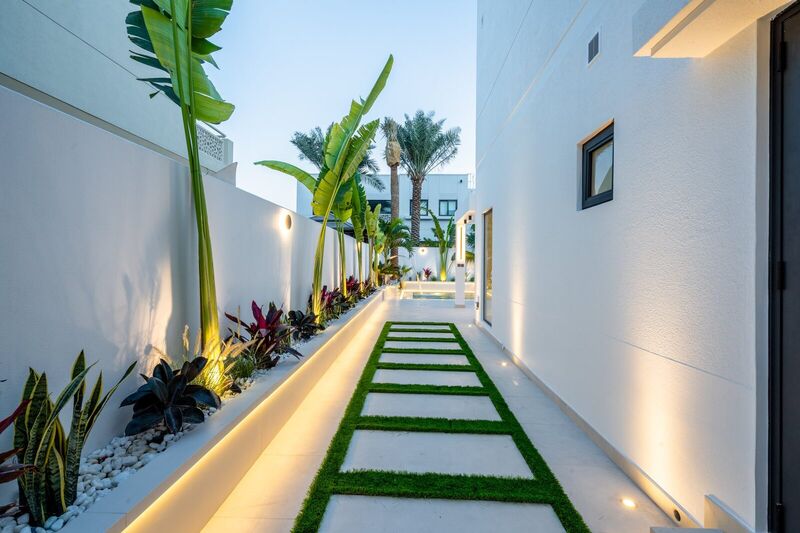
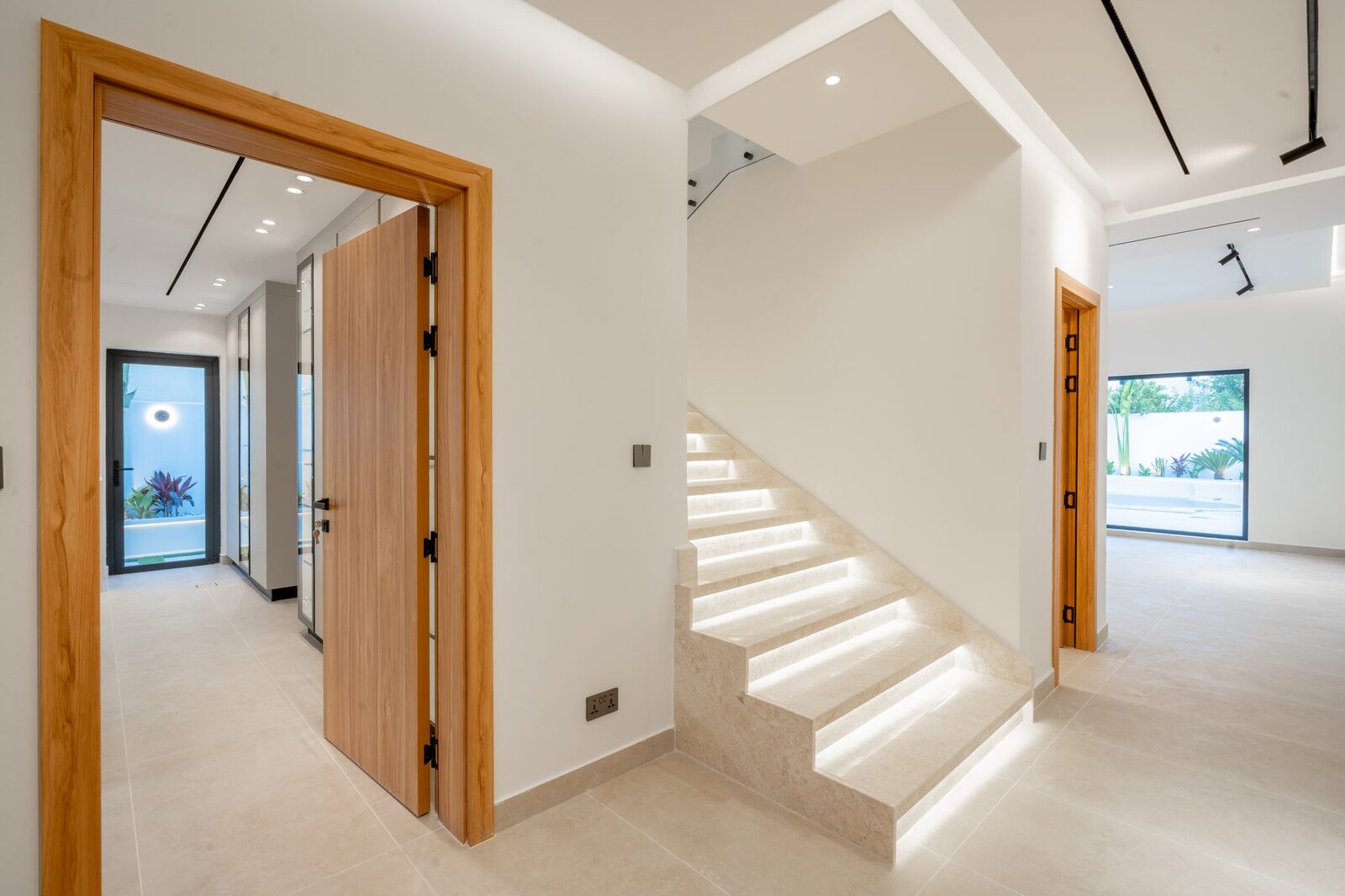
"Minimalist" has become one of the most requested — and most misunderstood — words in Dubai villa renovation briefs. Clients often mean one of two quite different things: a stark, gallery-white, almost clinical space, or a warmer, softer look built around natural wood and muted tones. The second is closer to what's usually called Japandi, and it's the direction we're seeing far more often in our own project briefs, and across the broader shift covered in our 2026 interior design trends for Dubai villas.
Both styles share a foundation of restraint — fewer objects, cleaner lines, no visual noise. Where they diverge is in temperature, texture, and philosophy, and that divergence matters enormously once you're specifying real materials for a real villa in a hot, bright, marble-heavy city like Dubai.
Japandi vs. minimalism: what's actually different
Pure Western minimalism, at its most severe, strips a room down to its geometry — white or grey walls, monochrome furniture, glass and polished steel, very little pattern or texture. It can look extraordinary in photographs and feel cold to actually live in, especially in a family villa where daily life leaves traces.
Japandi is a fusion of Japanese and Scandinavian sensibilities, and it keeps the restraint while rejecting the coldness. It borrows wabi-sabi — the Japanese appreciation of imperfection, natural ageing, and handmade irregularity — and pairs it with the Scandinavian instinct for warmth, comfort, and function-first design. The result favours light, natural timber over glass and chrome; hand-finished ceramics over glossy mass-produced pieces; and a deliberate use of empty space, known in Japanese design as ma, not as an absence but as an active design element that lets the room breathe.
Put simply: minimalism is largely about how much you remove. Japandi is about what you deliberately keep, and how warm it feels once you do.
Why Japandi suits a Dubai villa specifically
Dubai interiors already lean cool by default. Large-format marble and porcelain floors, glass facades, and air conditioning running for most of the year all push a space toward a colder feel before a single furniture decision is made. Stack a stark, cold-toned minimalist scheme on top of that and a villa can start to feel more like a showroom than a home.
Japandi works as a natural counterbalance. Warm timber joinery, textured linen upholstery, and lime-washed or micro-cement walls introduce tactility and warmth exactly where Dubai's architecture and climate remove it. The natural materials also feel grounded against the glass, steel, and stone that dominate contemporary villa architecture here — a visual and physical anchor rather than a competing cold surface. It's a big part of why this palette keeps appearing in the projects we're asked to deliver through our villa renovation service in communities like The Meadows and Arabian Ranches.
The material palette that actually reads as Japandi
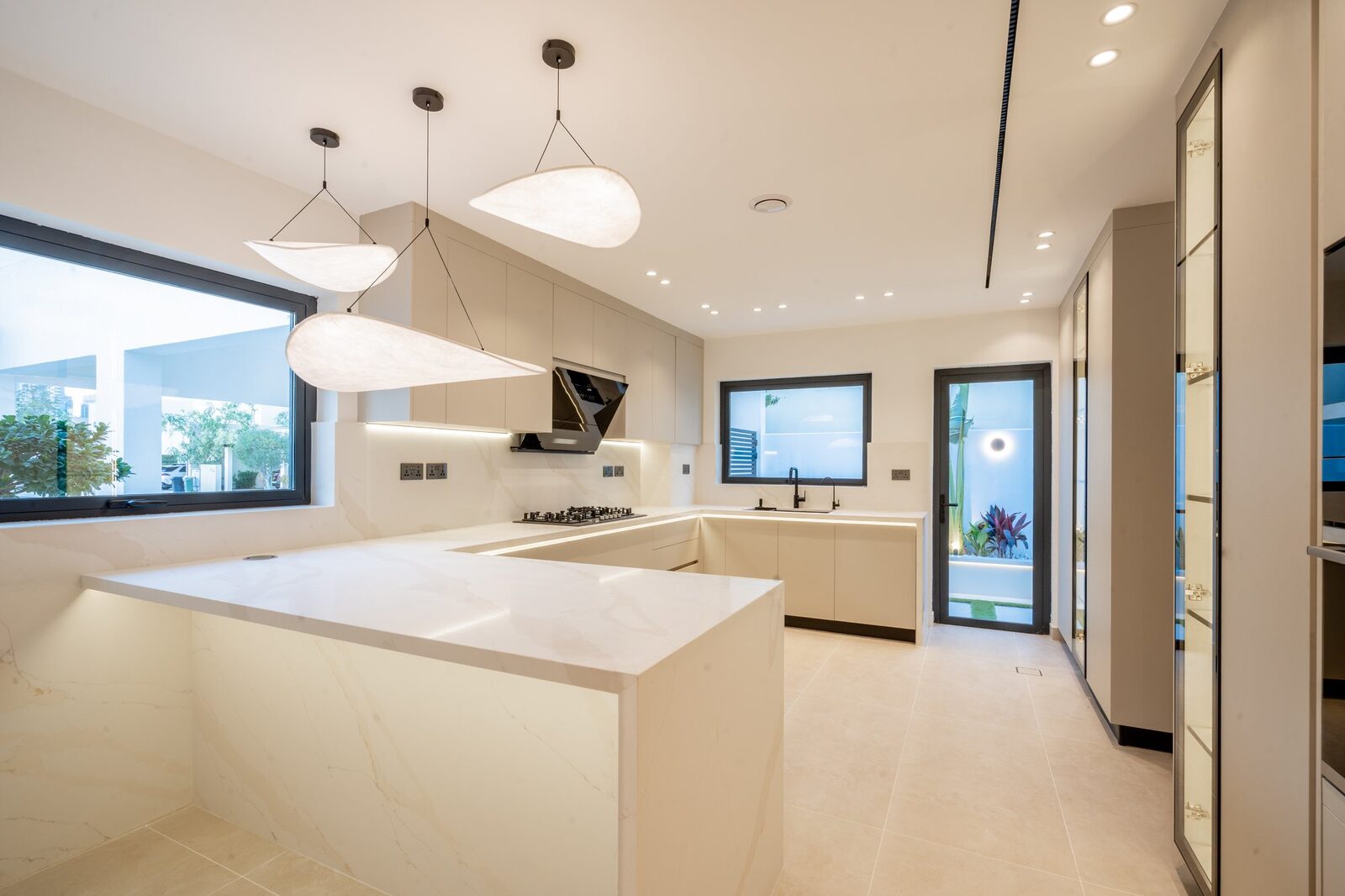
The style lives or dies in material selection, not in a colour swatch. The palette we specify most often includes:
- White oak or ash joinery — light, warm-toned timber for kitchen cabinetry, wardrobes, and feature panelling, left with a natural or lightly matte finish rather than a high-gloss lacquer.
- Unlacquered brass or matte black hardware — handles, taps, and fittings that age naturally or hold a soft, non-reflective finish, avoiding the coldness of polished chrome.
- Linen and boucle upholstery — nubby, tactile fabrics on sofas and dining chairs that add visual softness without adding visual clutter.
- Lime-washed or micro-cement walls — a textured, slightly irregular wall finish that reads as handmade rather than factory-flat, in keeping with the wabi-sabi principle.
- Low-profile furniture — pieces set closer to the floor, with visible joinery and solid-wood legs rather than boxy upholstered forms, which keeps sightlines open and rooms feeling larger.

Colour discipline: warm neutrals, not cold grey
Most minimalist schemes lean on a 60-30-10 colour rule — a dominant neutral at 60%, a secondary tone at 30%, and an accent at 10%. Japandi uses the same discipline but shifts every band toward warmth: sand and stone as the dominant tone instead of cool grey, warm walnut or taupe as the secondary layer, and a single charcoal or deep clay accent rather than black. We go into this shift in more depth in our guide to modern colour palettes for Dubai interiors, but the short version is that warm neutrals photograph almost as cleanly as cool ones while feeling considerably more livable day to day.
💡 How to avoid the "cold minimalist" trap
Layer at least three distinct textures into every room — for example, a woven rug, a linen sofa, and a raw-timber console — and specify warm-toned lighting at 2700-3000K throughout. Cool white light above 4000K is the single fastest way to make a pared-back interior feel clinical rather than calm.
Decluttered storage as a design decision, not an afterthought
Both Japandi and minimalism depend on disciplined storage — visible clutter undoes the calm of the whole room instantly. The difference is that Japandi treats this as a deliberate design layer rather than a practical fix bolted on at the end. Integrated joinery that runs floor-to-ceiling, hidden appliance panels in the kitchen, and negative space left intentionally around key pieces all reinforce the sense of *ma* rather than simply hiding mess. This same function-first thinking is what drives good decluttered joinery in a home office built into a villa renovation, where storage needs to disappear completely when the room isn't in use.
Keeping it warm, not sterile, in a family home
The most common objection to any pared-back style is that it won't survive daily family life — that it will feel too precious, too cold, or too easily disrupted by kids, guests, and everyday clutter. Japandi is specifically designed to resist that outcome, provided a few principles are followed. Texture layering (rugs, linen, raw timber, ceramics) does most of the work, followed closely by lighting temperature — 2700-3000K warm white throughout living spaces, never cool white. Finally, allow a handful of sculptural or personal pieces — a favourite ceramic bowl, a single striking light fixture, a piece of art — rather than editing everything down to nothing. True Japandi isn't empty; it's edited, and there's a meaningful difference between the two.
Curious What This Would Cost for Your Villa?
Our calculator factors in your exact size, finish choices, and room count — no generic averages.
Try the Cost CalculatorFrequently asked questions
What is the difference between Japandi and minimalist design?
Minimalist design is defined mainly by restraint — fewer objects, cleaner lines, and often a cool, monochrome palette. Japandi shares that restraint but adds warmth: light natural wood, imperfect handmade textures, and a softer, earth-toned palette drawn from Japanese wabi-sabi and Scandinavian hygge. In short, minimalism is about how much you remove; Japandi is about what you keep and how warm it feels.
Is minimalist design too cold for a family villa?
Pure, cold-toned minimalism can feel sterile in a lived-in family home, especially paired with Dubai's marble floors and strong air conditioning. The fix isn't abandoning minimalism — it's layering in warm materials, textured textiles, warm-toned lighting around 2700-3000K, and a few sculptural or personal pieces, which is essentially what Japandi does by design.
What materials define a Japandi interior in Dubai?
Typical materials include white oak or ash joinery, unlacquered brass or matte black hardware, linen and boucle upholstery, lime-washed or micro-cement walls, and low-profile solid-wood furniture. In Dubai these natural, tactile materials work especially well because they counterbalance the coolness of glass facades, marble, and heavy air conditioning.