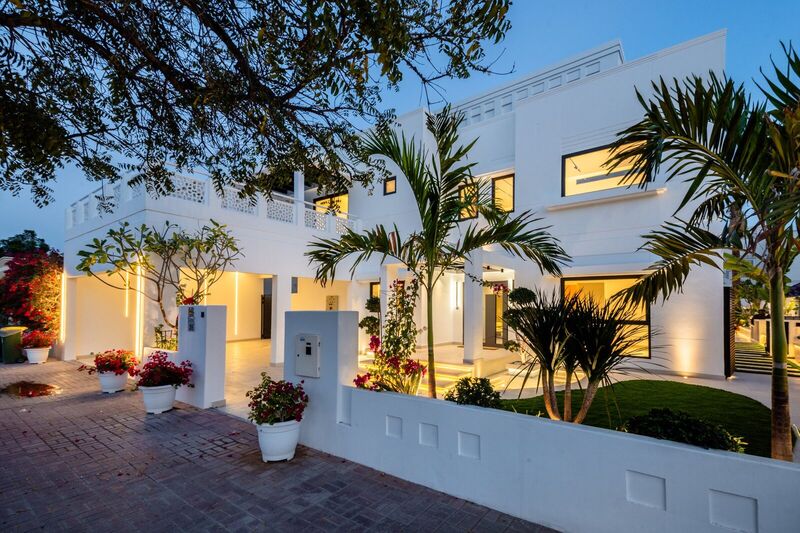
Outdoor tiling takes a beating in Dubai that indoor flooring never has to face — direct, unfiltered sun for most of the day, pool chemicals and salt-system water, and surface temperatures that can exceed 60-70°C on a dark tile in July or August. Get the specification wrong and you're looking at cracked tiles, uncomfortably hot bare feet, or a genuinely dangerous slip risk around the pool within a year or two. Get it right, and a good outdoor tile will comfortably outlast the villa's next two renovation cycles.
Slip resistance (R-rating)
This is the single most important safety specification for any tile near a pool. Outdoor and wet-area tiles are rated on the R-scale (R9 to R13, increasing grip), and pool copings and immediate pool surrounds should carry a minimum R11 rating, with the wider surrounding deck acceptable at R10. Always specify a textured or structured surface finish — polished porcelain or polished natural stone should never be used poolside, no matter how good it looks in the showroom; wet, polished stone underfoot is a genuine fall hazard.
Colour and heat
Colour has a bigger effect on comfort than most people expect. Light tones — sand, ivory, soft grey — reflect significantly more solar radiation and stay noticeably cooler underfoot than charcoal or black tiles, which look striking in photos but can be genuinely painful to walk across barefoot at 2pm in peak summer. If a darker tile is non-negotiable for the design, limit it to shaded areas under a pergola rather than open, all-day sun exposure.
Porcelain pavers (20mm outdoor-rated)
Thick 20mm porcelain pavers — roughly double the thickness of indoor porcelain — are purpose-built for exterior use. The colour runs through the full body of the tile, so any chip shows the same colour rather than a white core, and water absorption stays below 0.5%, making them highly resistant to pool chemicals and salt-system water. Their thickness and strength also allow them to be laid on raised pedestal systems over a drainage void, useful for elevated decks or covering uneven substrate without a full re-screed.
Natural stone outdoors
Travertine remains a popular choice around Dubai pools for its classic look and naturally cooler surface feel in certain finishes. It is, however, porous and needs periodic sealing to resist staining from pool chemicals, sun oil and general outdoor use. Denser stones like granite or basalt are extremely hard-wearing and low-maintenance, though — like porcelain — a dark granite or basalt can still run hot in direct sun, so colour selection matters as much with natural stone as it does with porcelain.
💡 Always ask for the tile's R-rating in writing
Don't take "non-slip" as a specification on its own — ask for the actual R-rating (R10 minimum for decks, R11 for pool coping) in the material submittal before tiles are ordered, and confirm it against the manufacturer's data sheet.
⚠ Movement joints are not optional outdoors
Tiles laid edge-to-edge without expansion/movement joints have nowhere to go as they expand and contract through Dubai's daily heat cycling — they will crack or lift, usually within one to two summers. A properly detailed installation includes movement joints at regular intervals and around the pool edge.
Cost in Dubai
Using the same pricing tiers that apply indoors, outdoor-rated ceramic tiles run AED 45-70 per sq ft and outdoor porcelain AED 70-120 per sq ft, though outdoor-specific 20mm pavers and specialist slip-rated finishes typically sit toward the upper end of that range. For the same reasoning applied to interior floors, see our guide to porcelain vs marble flooring, and if your terrace sits under large glazing, solar window film can reduce reflected heat glare from an adjacent pool deck back into the house.
Renovating a Pool Deck or Terrace?
Our pool renovation and landscaping teams can spec the right slip-rated, heat-resistant tile for your outdoor space.
Try the Cost CalculatorFrequently asked questions
What slip rating should pool deck tiles have in Dubai?
Pool coping and the immediate pool surround should carry an R11 slip rating given constant wet-and-barefoot use, while the wider surrounding terrace can use R10. Always choose a textured or structured finish over polished for any outdoor tile.
Do dark outdoor tiles get too hot in Dubai?
Yes, significantly. Dark charcoal or black tiles can reach surface temperatures well above light-coloured tiles in direct summer sun, often too hot for comfortable bare feet in the early afternoon. Sand, ivory and light grey tiles reflect more solar radiation and stay noticeably cooler.
Why do outdoor tiles crack in Dubai?
The most common cause is missing or insufficient movement (expansion) joints. Tiles laid edge-to-edge without joints have nowhere to move as they expand and contract through Dubai's daily heat cycling, and will eventually crack or lift, typically within one to two summers.